Washington, D.C., August 11, 2026– The South Korean and the United States armies have announced on Monday that their yearly huge joint military exercise known as “Ulchi Freedom Shield” would commence next week, following North Korea’s resumption of its banned ballistic missile tests under UN Security Council resolutions. This comes after a recent report published by the Congressional Research Service, which stated that the 73-year-old alliance between the two countries is at an actual crossroads and has important decisions ahead regarding nuclear talks, submarines, and the presence of US troops on the peninsula.
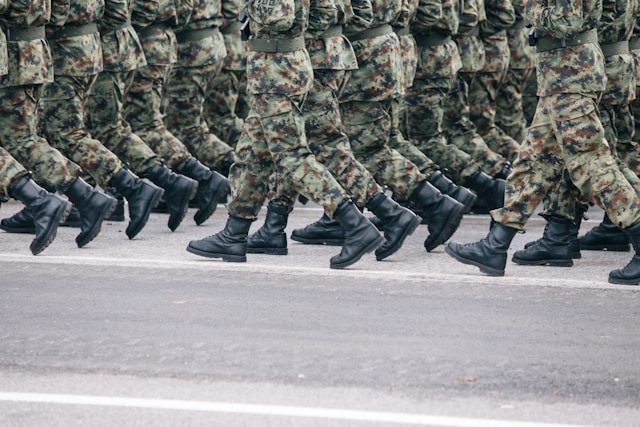
“Ulchi Freedom Shield,” which will last for 11 days starting next Monday, will involve about 18,000 South Korean soldiers and will be of similar size as in previous years, Col. Jang Do-young, a spokesperson of the South Korean army, said during an official defence briefing detailed in an announcement by U.S. Forces Korea (USFK).
Speaking at the same briefing, U.S. Forces Korea spokesperson Col. Ryan Donald said the drills will incorporate “lessons from recent conflicts” to sharpen realism, describing the exercise as an opportunity to strengthen the alliance’s readiness through combined, joint, all-domain operations. Donald specifically cited North Korea’s dispatch of troops to support Russia’s war against Ukraine as an example of the evolving threat picture shaping this year’s planning.
In response to North Korea’s missile tests, the drills come as an intensified process of training which, in previous years, was harshly condemned by Pyongyang as preparation for invasion – a label that Washington and Seoul had vehemently refuted.
The underlying strategy behind the drills is based on the efforts made by the bilateral Nuclear Consultative Group (NCG). In accordance with the Washington Declaration, the NCG was created to provide South Korea with better knowledge regarding the U.S. nuclear plans and to integrate South Korean conventional forces with U.S. strategic assets, thus creating what is called the Integrated Extended Deterrence. With the new doctrine in mind, the United States has been sending its strategic bombers, attack submarines and carrier strike groups on routine bases to the Korean peninsula in order to train together with ROK conventional forces armed with stealth fighter jets and precision strike weaponry.
Geopolitical Friction and Deterrence Realities
According to Washington and Seoul, these drills are solely for defense purposes. Nevertheless, Pyongyang continuously rejects these drills by branding them as rehearsals of invasion plans through conducting tests on flights of weapons as well as increasing the readiness of its military forces.
In spite of tensions in geopolitics, the military always insists that realistic training is extremely important. Through combining the nuclear superiority of America with the powerful conventional force structure of South Korea, the alliance aims to demonstrate to any potential adversary in the region that the use of non-conventional weapons will be followed by an instant reaction.