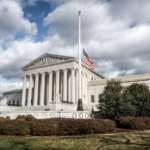
WASHINGTON DC. WA, September 12, 2026 — AI has gone from a niche policy talking point to a near-constant presence in Congress. This year, lawmakers on both sides of the aisle have introduced dozens of bills covering a wide range of issues, from the safety of frontier models to potential applications in the court system. Most congressional staffers, however, remain pessimistic about the prospects for comprehensive legislation passing anytime soon, despite that activity.
A Growing Legislative Pipeline
Introduced in the House this past July, the FRONTIER Act would create federal oversight of advanced AI systems developed for interstate and foreign commerce. Tracked across Congress.gov, this bipartisan legislation was referred to committees overseeing energy, commerce, and science. Additionally, a bill addressing the use of AI in the judicial system has passed two early committees this year.
In past years, similar bills were put forth by lawmakers aiming to establish guardrails around artificially manipulated media—or what are now commonly called AI-generated deepfakes—in political advertising and campaigns. Despite bipartisan support, those efforts stalled, reflecting a broader challenge Congress faces in translating concerns about artificial intelligence, such as safety and privacy, into binding law. Committee aides note that a similar set of structural barriers exists today for the current slate of bills.
Staffers Remain Skeptical
About two-thirds of senior Capitol Hill staffers do not expect federal AI legislation to pass this year, according to recent surveys. Only a minority expressed confidence that lawmakers will reach an agreement before the end of the session. That skepticism persists even as concerns over the risks posed by AI are shared across party lines.
Some of this gridlock stems from debate over how much authority should remain with federal agencies rather than individual states. That dynamic leaves a patchwork of states moving forward with their own AI rules, in some cases without waiting for a national standard. Industry organizations have advocated for federal preemption to avoid complying with fifty distinct state regulatory frameworks.
Agencies Are Moving Where Congress Has Not
While legislation remains stalled, federal agencies continue to build oversight capacity independently. The National Institute of Standards and Technology (NIST) has expanded its efforts on AI risk management frameworks for voluntary adoption by agencies and companies. The Government Accountability Office (GAO) has also been requested to examine how existing rules and guidance documents apply across federal agencies.
This executive-led approach helps address gaps left by delayed legislation, though it lacks the binding authority of formal statute. Testifying before Congress, agency officials have explained the limitations of voluntary frameworks. Still, they emphasize that incremental rollouts are preferable to leaving developers and companies in regulatory uncertainty.
What Happens From Here
Industry leaders, academic experts, and lawmakers note that technology continues to advance faster than the governance processes designed to oversee it. Both Republicans and Democrats have found common ground on targeted issues, such as requiring transparency for high-risk AI systems. Research centers like the Stanford Institute for Human-Centered AI (HAI) continue to provide technical analysis to guide lawmakers as legislative debates continue.
As midterms approach, few expect major AI legislation to pass before Congress turns its focus to campaigning. This timeline leaves agencies, courts, and state legislatures to shape AI policy in the interim. It remains to be seen whether Washington will bridge that gap before the next Congress convenes.