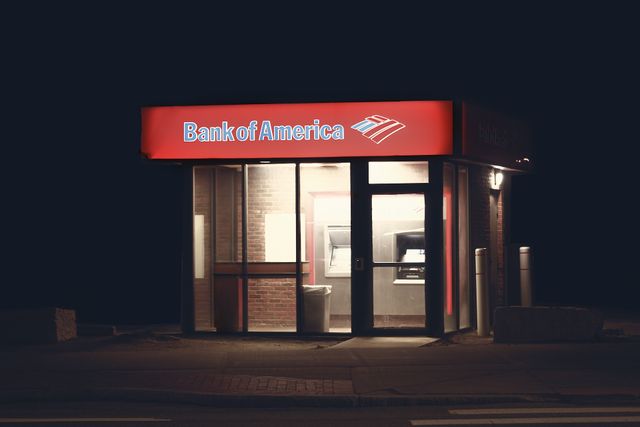
WASHINGTON, October 15, 2026 – The fine hit with an amount designed to shock: $1.2 billion. But the more alarming amount is the $5 billion of suspicious transactions which the federal regulators have found Bank of America did not report promptly.
The Treasury Department announced enforcement actions totaling more than $1.21 billion against Bank of America, the second-largest U.S. bank, for violations of the anti-money laundering and sanctions laws. The settlement includes the third-highest penalty in Treasury’s history and the highest ever levied by the Office of the Comptroller of the Currency.
“Financial institutions are on the front lines of protecting our economic and national security,” Treasury Secretary Scott Bessent said. “When a bank of this size fails to meet its anti-money laundering and sanctions obligations, the consequences extend far beyond its own walls.”
Systemic Lapses in High-Risk Tracking
FinCEN, a Treasury financial crimes regulator, levied a fine of $1.2 billion after discovering the bank failed to mitigate or report priority national security risks. Investigators zeroed in on unflagged money laundering networks tied to China and illicit financial flows moving along the U.S. southwest border.
The bank officially admitted to willful violations of the Bank Secrecy Act- a foundational 1970 statute mandating that financial organizations actively detect and report suspicious money movement.
Here’s the part keeping federal regulators up at night: Bank of America repeatedly blew past statutory deadlines when filing suspicious activity reports. Over $1 billion of those delayed filings directly touched national security threats or high-priority criminal networks.
A Compliance System Under Strain
Separately, the OCC fined the bank $750 million because its Bank Secrecy Act and anti-money laundering program was “deficient and ineffective.” The transaction monitoring system could not adequately monitor trillions of dollars of transactions, and as a result, there were many instances of late suspicious activity reports.
According to the Treasury Department, the bank had long known that suspicious activity was not being escalated to investigators but had done nothing to fix it. The Treasury Department also noted that key compliance personnel were not well trained and experienced enough, and the audit department had overlooked important issues.
That raises an uncomfortable question: if a bank of this scale cannot reliably flag suspicious flows, how much illicit money moves through the system before anyone notices?
Widespread Sanctions and Watchlist Glitches
The Office of Foreign Assets Control agreed to pay $11.6 million to resolve 475 cases of violations of different sanctions programs. These programs include those related to Iran, Russia, Belarus, Burma, Somalia, narcotics traffickers, and global terrorists.
These mistakes were very diverse, including the sending of payments through blocked banks as a result of both technical and human error, the conducting of transactions with designated persons as a result of poorly set up alerts, the delay of watch list updates, and incorrect handling of blocked persons’ accounts.
Mandatory Independent Audits and Future Outlook
While the bank claims to have spent billions on technology and deployed thousands of its employees against financial crime and that it has come “very far” on remediation, there is more to the consent order than mere promises.
Bank of America will be required to conduct a lookback, together with an outside party, for identifying and reporting any transactions that were not reported due to the weaknesses in the system. Bank of America will also be subject to reviews of suspicious activity monitoring, customer due diligence, foreign correspondent account diligence, and data governance systems.
Those reviews will focus on risks tied to the U.S. southwest border, cartels and narcotics trafficking, Iran, and Russia.
The fine is immense but not the biggest one that the U.S. Treasury Department has ever issued; it is far behind the nearly $4 billion fine that was imposed on Binance for the year 2023 and the nearly $3 billion fine that was imposed on TD Bank in 2024. However, the message from Washington is clear. The size of a bank doesn’t save it from the necessity to detect funds’ movements.