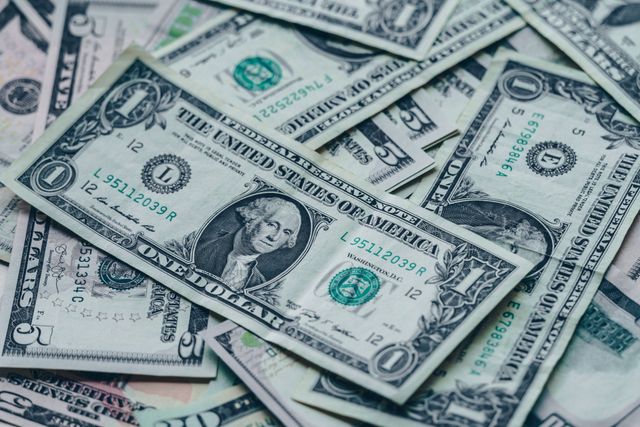
WASHINGTON, D.C., August 18, 2026– The U.S. dollar fell to its weakest level in more than two months on Monday, with the euro touching a two-month high near $1.16, as a run of softer American economic data led traders to sharply scale back bets that the Federal Reserve will raise interest rates next month.
The dollar’s fall followed economic data released last week which revealed that U.S. retail sales dropped in July, for the first time in nine months, amid weaker-than-expected job growth and worsening consumer confidence, beyond what economists had expected. These factors, together with lower-than-expected inflation numbers, weakened the rationale for any further interest-rate hikes by the Federal Reserve at a time when markets were gearing up for a potential interest rate increase due to rising oil prices.
According to CME FedWatch futures data, traders now assign roughly a 30 per cent probability to a Fed rate increase at the central bank’s September meeting, down sharply from above 50 per cent just a week earlier. “Traders are selling off the dollar as they worry about U.S. economic growth and the Federal Reserve’s interest rate response after recent underwhelming data,” said Kit Juckes, chief FX strategist at Societe Generale.
The dollar index, which is used to gauge performance against other major currencies, has been falling for three days straight to reach 99.5 levels, the lowest in over a month. One of the main currencies that benefited from the move was the euro, which rose to approach two-month highs, while the Japanese yen also gained some strength, further reversing its losses after coordinated efforts between U.S. and Japanese policymakers to support the currency in late July.
Not all analysts are convinced the dollar’s slide reflects a settled view on Fed policy. “There were enough quirks in the data to keep the market on guard for a potential rate hike before the end of the year,” said Thomas Simons, chief U.S. economist at Jefferies, adding that forecasters remain divided on the central bank’s next move.
The spotlight now shifts to Wednesday’s publication of the minutes of the July monetary policy meeting held by the Federal Reserve, where the officials kept the interest rate unchanged at 3.50 per cent to 3.75 per cent, with several officials reportedly in dissent for a rate hike. Investors will also keep an eye out for the Fed’s Jackson Hole conference in the coming weeks for additional insights on the policymakers’ views, considering how fractured they were during the summer.
The moves in currency markets take place against the background of high, yet range-bound oil prices, with oil prices in the $80s per barrel in the face of continuing disruptions linked to the situation surrounding Iran and the Strait of Hormuz. High energy prices have added an additional complication to the inflation outlook despite lower prices across other goods, making the Federal Reserve look at weakening growth against the threat of energy-based inflation.
The developments in currency markets were mostly synchronized with developments on stock markets in recent weeks. Stock markets in the U.S. reached record heights thanks to solid performance from key tech companies with their investments in artificial intelligence, while some analysts pointed out that excessive AI-based investments, financed with corporate borrowings rather than revenues, made these companies vulnerable to changes in interest rates. “We still think that AI and tech is the dominant theme of this bull market,” said Keith Lerner, chief investment officer and market strategist at Truist Advisory Services, though he and others have noted that higher borrowing costs remain one of the few forces capable of derailing the rally.
For now, the softer dollar and reduced rate-hike expectations have offered some support to that narrative, easing financial conditions at a moment when both currency and equity markets remain highly sensitive to incoming economic data and any signals from the Fed about the path ahead.