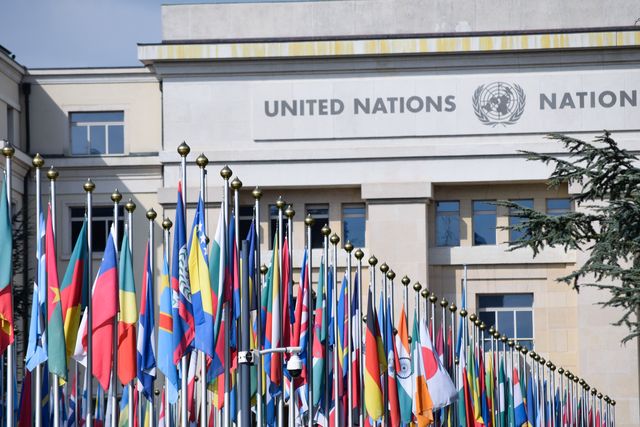
WASHINGTON, September 3, 2026– The target line that world leaders drew in the sand a decade ago has essentially been washed away. On Wednesday, September 2, the United Nations Environment Programme released an eye-opening statement that confirms what many atmospheric scientists have known for months: humanity won’t stop global warming from surpassing 1.5 °C above preindustrial levels within the next few years.
Instead, the global thermometer is hurtling straight past it.
So what happens now? The world is confronted with a dark recalibration. In place of trying to pretend that the 1.5°C ceiling is still intact, UNEP’s new study, Limiting Overshoot, argues that policymakers must pivot to a “peak and decline” strategy. The new goal isn’t preventing the breach; it’s limiting how far temperatures spike, shortening the duration of the crisis, and eventually driving temperatures back down.
It’s a bitter pill to swallow, but it isn’t a declaration that climate action has become pointless.
Under this strategy, governments can’t just coast on net-zero promises. The pathway requires drastic reductions in the emissions of greenhouse gases, especially methane, followed by carefully governed CO2 removal to achieve net-negative emissions. UNEP’s most optimistic scenario estimates that peak warming will hit roughly 1.8 °C above preindustrial levels. Other pathways show far higher spikes.
And frankly, the warning leaves little room for comfort.
“Every fraction of a degree matters,” warned UNEP Executive Director Inger Andersen, pointing out that heatwaves and other climate impacts are arriving faster, lasting longer, and causing deeper disruption. Crossing 1.5 °C won’t trigger a single apocalyptic moment when the world suddenly fails; rather, risks will steadily intensify with every additional fraction of a degree and every year spent in the red zone.
The day-to-day fallout will be severe. Expect more intense extreme weather conditions, destruction of ecosystems, pressure on the supply of food and water, damage to infrastructure, and health impacts. The most immediate risks are faced by small island states and low-lying coastal cities, which include forced relocation and gradual loss of habitable land.
Scientists and policymakers are equally terrified about triggering irreversible planetary tipping points. We’re talking about the destabilization of major ice sheets, Amazon rainforest dieback, and the potential failure of the Atlantic Meridional Overturning Circulation (AMOC)—the ocean current system that governs global weather. Some impacts could hit overnight, while others will accumulate quietly over decades until the bill comes due.
Carbon dioxide removal through technology or nature-based solutions such as reforestation, soil management, or direct air capture will be essential to bring temperatures down. However, UNEP made clear that carbon removal isn’t a magic eraser. It can never substitute for swift emission cuts and requires strict safeguards on environmental integrity, equity, and scale.
At the same time, adaptation must go hand-in-hand with mitigation. Governments will have to spend staggering sums on air conditioning, water management, disaster preparedness, health care, and climate-smart farming while at the same time getting rid of fossil fuels.
That price tag will be brutal—and deeply unfair. Those nations which have emitted the least historically are frequently the most vulnerable to climate impacts and have the least money to respond.
Reacting to the findings, UN Secretary-General António Guterres called for the overshoot period to be “as small and short as possible,” urging governments to match the worsening outlook with vastly greater ambition.
Even if pulling temperatures back under 1.5 °C remains technically feasible, it won’t restore our planet to its original state. The damage will be done. World leaders are left with a simple choice: a shorter, manageable overshoot with lower risks—or a hotter, longer one whose consequences will be impossible to reverse.