WASHINGTON, September 4, 2026– While decades passed with prototypes and trials, this week has seen the United States Army finally breach a threshold. It had eluded its planners ever since the Cold War era: that of developing a serial-production high-energy laser. On September 3, 2026, the armed forces of America signed a $464.8 million contract with AeroVironment on its Enduring-High Energy Laser, or E-HEL, program.
And this matters because it changes the cost calculus of air defense.
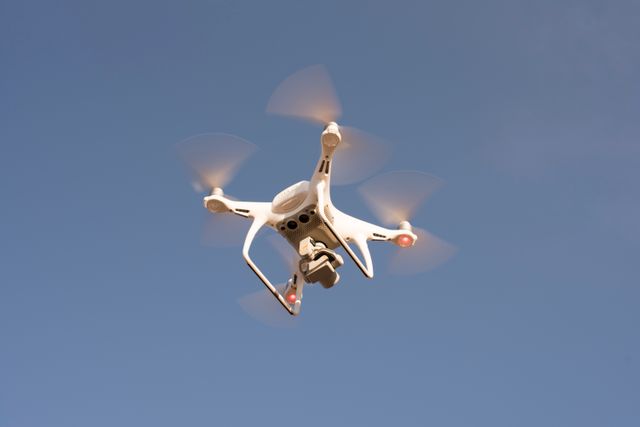
Instead of launching $100,000 interceptors against inexpensive drones, E-HEL launches a beam and then “reloads” by using extra energy. And it’s no longer a concept straight out of science fiction. Via Other Transaction Authority, AeroVironment will be providing dozens of 30-kilowatt LOCUST X3 systems within a few years, with some capability already within reach, according to the company’s executives. E-HEL works as a laser system that brings down Group 1-3 unmanned aircraft, ranging in size from tiny quadcopters all the way to 1,320-pound machines.
“This first-of-its-kind directed energy program will enable our formations to defeat unmanned systems and dominate from the outset,” Army Vice Chief of Staff Gen. Christopher LaNeve said in a statement. Pairing human ingenuity with advanced technology is what ensures our Army will continue to outpace America’s adversaries.
Nobody’s pretending lasers solve every air-defense problem. But the math is hard to ignore.
The initiative is spurred by the fact that the Army has received disappointing responses from its soldiers when testing out the DE M-SHORAD prototypes in the Middle East. The LOCUST X3 system does not come with a platform; rather, it’s agnostic, designed to work with platforms such as the Joint Light Tactical Vehicle (JLTV) and Infantry Squad Vehicle before scaling up to bigger platforms such as the Stryker, tanks, and even ships.
John Garrity, AeroVironment’s vice president of directed-energy systems, didn’t mince words about the scale-up. The company had been building “tens of systems a year.” Now it’s gearing up to produce “into the 20s per year,” with plans to scale well beyond that over the next 12 to 24 months. Initial deliveries start soon.
“It’s purpose-built to be ready for all types of warfare around the globe and all types of environments,” Garrity said, adding he expects LOCUST X3S to show up “everywhere and in all combatant commands across the globe because that’s how needed this capability is.”
The contract comes after successful tests conducted at White Sands Missile Range through the collaboration of Joint Interagency Task Force 401 and PAE Fires. During these tests, it proved to be effective and safe to conduct drone countermeasures in U.S. airspace. Furthermore, a 20-kilowatt LOCUST version has been tested around the southern border in El Paso, Texas, as well as in recent demonstrations to Defense Secretary Pete Hegseth and Army Secretary Dan Driscoll at White Sands. According to the company’s representatives, the LOCUST family boasts a “kill count in the thousands” on test ranges—that is not necessarily an indication of combat effectiveness but is definitely a relevant piece of information for purchasing officers.
Here’s the rub: lasers aren’t magic. They fare poorly in dust, smoke, and precipitation; they require reliable power and thermal control; they work well against drones and soft targets but not against ballistic missiles. This is why the Army considers E-HEL as supplementary to kinetic defense systems. Directed energy can defeat drones “at a much lower cost than using more expensive kinetic weapons like missiles,” the service noted. In a fight where adversaries flood the sky with cheap UAVs, that cost exchange ratio could be decisive.
Garrity wouldn’t specify deployment locations, but he pointed to current operations where Iranian-made drones “are causing a tremendous amount of harm for our warfighters and our allies overseas.” But the LOCUST X3 is designed to target Group 3 systems, while also dealing with Group 1 and 2 systems, he said.
It’s difficult to know whether this production award will be the point at which lasers become firmly embedded in the Army’s air defense system architecture. Previous projects have failed after successful trials, but with multiple systems in the pipeline, an established production schedule, and the urgency of dealing with drone threats, things seem different this time.
To troops that have seen drone swarms change the nature of modern warfare, the idea is straightforward: more shots, cheaper shots, and ammunition that replenishes itself as long as the power generator keeps running. That’s no panacea. But it may be enough.