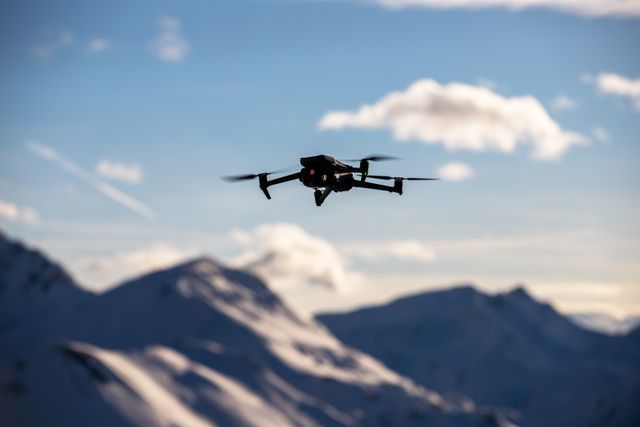
WASHINGTON, November 12, 2026 – Observe an operations officer monitoring a radar screen on the Potomac River in the evening, and it’ll become evident in no time that classic air defense was not designed to deal with a two-pound quadcopter flying just over the treetops.
In response to new drone threats, federal organizations such as defense and homeland security departments are increasing counter-drone coordination and procurement of assets to better defend sensitive sites; they want to shift from sporadic event-specific perimeters to more consistent interagency monitoring and mitigation. Instead of leaving military facilities, federal offices, and key infrastructure locations to defend themselves against drone intrusions in isolation, current efforts by federal entities involve improving inter-departmental telemetry communication and cooperation among Department of Defense (DoD), the Department of Homeland Security (DHS), and the Federal Aviation Administration (FAA), according to Homeland Security Today.
Low-flying hardware. Narrow response windows. Reduced tolerance for delayed handoffs.
Here’s the rub: the commercial drones have become very small and quiet as well as quite affordable, yet conventional air-traffic radars built for manned aircraft often treat them like passing bird flocks or urban clutter. Within the framework of these growing C-UAS programs, the authorities are deploying multi-sensor systems with radio frequency, electro-optic cameras, and low-altitude radars along with more efficient operational processes.
But putting into place stronger electronic protections over the busy American cities isn’t a matter of simply flipping a switch, and many aviation and privacy advocates are still skeptical about this. With federal teams using radio frequency jammers and signal mitigators in busy metropolitan regions, who will ensure that any of the emergency helicopters, commercial drones, and local wireless networks do not get affected by this stray radio-frequency interference? Discussions in Washington have been focusing on the need to determine where and when non-military agencies can lawfully disrupt unmanned aerial vehicle in an unmanned aerial vehicle in restricted airspace.
Washington national security observers routinely point out that detection means little when the legal authority to act sits in another agency—a gap joint exercises have exposed repeatedly.
For those outside the Beltway, the implications range across power substations, nuclear reactors, port facilities, and big stadium venues—locations where an unmanned aircraft can zip past concrete barriers and chain link fences in mere seconds. By creating an information protocol on the exchange of threat data between federal watch centers and their local police partners, planners aim to plug the holes that used to force ground personnel to look skyward at rogue drones without having a means of identifying the operators.
It’s unknown if the new level of cooperation will be able to keep up with the fast-changing software that enables autonomous flight capabilities, but one thing is certain: drone operators adjust quickly, and regulation rarely keeps pace with innovation. At the moment, though, federal watch officers all over the country’s capital city and beyond have received clear instructions: Detect the intruder early, share the flight track, and never waste time deciding which agency is responsible in case of an emergency.