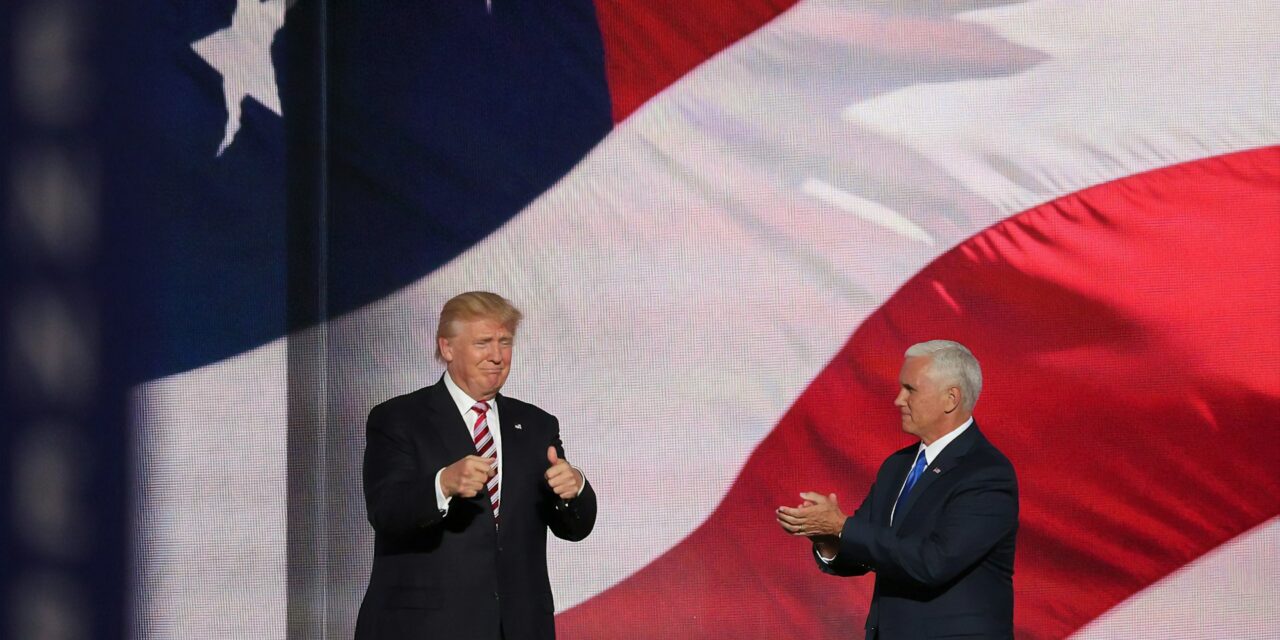
WASHINGTON, D.C., August 18, 2026– President Donald Trump publicly welcomed a new mutual defense agreement signed by Saudi Arabia, Turkiye and Pakistan, calling the pact a “BIG, BOLD, AND IMPORTANT FIRST STEP” toward regional self-reliance, even as analysts debate whether the arrangement can meaningfully substitute for decades of U.S. security guarantees in the Middle East and South Asia.
Trump’s comments, posted on his Truth Social platform on August 16, came roughly ten days after Saudi Crown Prince Mohammed bin Salman, Turkish President Recep Tayyip Erdogan and Pakistani Prime Minister Shehbaz Sharif signed the Mecca Joint Defence Agreement on August 7 in Islam’s holiest city. Trump wrote that he was “very happy” to see the three countries finally sign the pact, adding that it showed “the Middle East is coming together” and that countries in the region would “finally be able to defend themselves in a more meaningful way.”
The Pakistani leader Sharif thanked President Trump just a few hours ago for his leadership, which helped avert a larger crisis in the region, and promised that Pakistan, along with Saudi Arabia and Turkiye, would continue to play “a constructive role” in regional defense.
Indeed, the language used in this pact is similar to Article 5 in the NATO pact, which states that an attack on any of the three parties to the agreement will be considered an attack on all. In accordance with this pact, the three parties intend to set up coordination mechanisms through their defense ministers, foreign ministers, and military chiefs of staff, starting from command post exercises and field training, then gradually developing into joint ground, naval, air, and unmanned exercises. Official background provided by the Ministry of Foreign Affairs of the Republic of Turkiye noted that the framework is structured around a permanent coordination secretariat and joint military committees. Pakistani officials have described the agreement as “purely defensive in nature,” while Saudi officials have said it does not represent an attempt to build a sectarian or religious military bloc.
This agreement follows an earlier bilateral Saudi-Pakistani defense pact that was signed between both countries back in September 2025. It follows an increasing apprehension within the region regarding the dependability of American security guarantees due to the recent United States-Israeli military operation against Iran, which had been launched without prior consultation with Gulf allies.
Analysts who specialize in analyzing the region are split on what the deal is supposed to say in the end. An international relations expert based in Ankara contended that the Gulf countries “lost their deterrence” as a consequence of the Iran crisis, and that they now need to develop their deterrence capabilities independently of the United States. A defense analyst based in Riyadh, on the other hand, sees it differently. A separate Turkiye specialist described Ankara’s participation as motivated as much by status, establishing itself as “a security provider, rather than a security consumer”, as by immediate defense needs.
A Riyadh-based defense analyst offered a more measured reading, suggesting the pact reflects less a full U.S. retreat than regional partners moving to diversify their security relationships after the limits of American military presence were exposed. Trump’s welcoming response is broadly consistent with his long-standing position that U.S. allies should shoulder more of their own defense costs. Statements archived by the U.S. Department of Defense highlight continuous emphasis on burden-sharing across overseas theaters. At the NATO summit in June 2025, member states agreed to more than double their defense spending target, from 2 per cent of GDP to 5 per cent by 2035, following sustained pressure from Trump. The same weekend he praised the Mecca pact, Trump also announced he was scaling back joint military exercises with South Korea, citing cost concerns.
Still, several analysts cautioned against reading the pact as a genuine substitute for American power in the region. One expert on Gulf and Pakistani affairs noted the arrangement remains far smaller in scale than the roughly 50,000 U.S. troops currently stationed across the Middle East, describing the pact as adding “a separate layer of deterrence” rather than replacing existing security structures. Whether that layer proves durable is likely to depend on how the three signatories respond if one of them is ever actually attacked.