WASHINGTON, November 10, 2026 – Half-empty coffee cups littered the intelligence suites of Tampa, Florida, where analysts clustered around high-resolution satellite maps of border crossings from the Middle East and Central Asia regions. The blockade of coastal ports has been tough on Tehran in recent months, but weapons continue to find their way across land borders.
Washington is stepping up its campaign to choke off those backdoors.
United States Central Command has stated the activation of Task Force Iron Gate, an exclusive team formed by inter-agency collaboration to counter any kind of transit of weapons, dual-use technology, and other sanctioned materials by Iran. Located in Tampa, Florida, the team, consisting of about 20 civilians and military personnel seeks to locate and dismantle any such transit that bypasses traditional shipping routes.
This development signifies a major turn in the process of enforcement. According to United States officials, maritime enforcement has helped ensure that more than $25 billion worth of Iranian crude oil is not delivered to export destinations within the recent past months. Consequently, Iran has resorted to using alternative channels through the Caspian Sea.
And this matters because cutting off raw components is far harder than tracking giant container ships at sea.
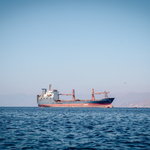
Components used for making guidance systems, electronic sensors, and machines used in manufacturing can be hidden inside commercial trucks or cargo ships traveling across the Caspian Sea. Iron Gate is capable of detecting such transport systems and disrupting them, taking into account its background in military, intelligence, and financial crime enforcement frameworks monitored by international authorities like the Financial Action Task Force.
Defence analysts say maritime enforcement is easier to monitor than dispersed land routes, which rely on navigating a patchwork of border crossings, customs posts, and transit corridors —a challenge outlined in broader regional security assessments by the International Institute for Strategic Studies.
Here’s the rub: the closing of land corridors depends upon the intricate workings of interagency collaboration and international collaboration, which will not be neat. The border crossings traverse difficult geographical regions where the jurisdiction becomes ambiguous.
Whether Task Force Iron Gate will succeed in sealing all these land loopholes remains to be seen. However, as military planners analyze the latest data being received from Tampa in real time, it becomes evident that Washington’s efforts to prevent Iran’s transportation of weapons is now moving inland.