WASHINGTON, D.C., August 17, 2026– President Donald Trump has directed the Pentagon to drastically curtail the yearly joint exercises between the United States and South Korea, a move which he linked both to South Korea’s unwillingness to participate in the U.S.-led operation against Iran, as well as a positive relationship with North Korean leader and the Chairman of the State Affairs Commission Kim Jong Un.
The Ulchi Freedom Shield exercises kicked off as scheduled on Monday and would go for 11 days, with about 18,000 South Korean troops joining American troops in the exercises. These exercises form part of the two main joint exercises carried out by the allies in a year, the other being during springtime, and are meant to improve preparedness for North Korean attacks through such activities as live firing, precision targeting, a wet gap river crossing exercise, and positioning of pre-positioned military equipment.
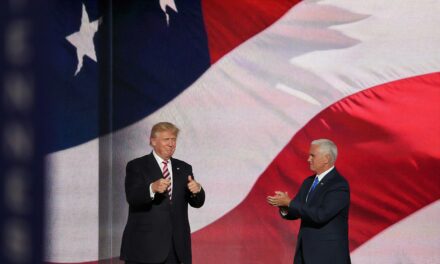
Trump announced in a post on his social media platform, framing his displeasure with the arrangement around his personal rapport with the North Korean leader. He said his warm relationship with Kim left him unhappy that Washington had long ago committed to the drills, arguing the exercises are costly and “totally inappropriate and hostile” toward a North Korea he described as having been unusually cooperative during his time in office. He said he had directed Defense Secretary Pete Hegseth to “substantially reduce” the drills, adding that it was too late to cancel them outright. Trump also said he had recently asked South Korea’s president whether Seoul would join US efforts toward denuclearizing Iran, and that the request was turned down.
This is clearly a major departure from how the administration viewed Seoul’s stance only months prior. In May, for instance, Hegseth lauded South Korea for boosting its military spending and accepting more responsibility for security in the Korean peninsula, which he described as a role model of burden sharing in alliances that others must emulate. This move is also consistent with the trend in which the administration has been expressing disappointment with traditional allies, including NATO countries, due to their failure to provide enough help for the Iran campaign.
The announcement received immediate backlash from Capitol Hill. Democrat Senator Mark Kelly, himself an ex-Navy pilot, argued that stripping down the joint drills was a poor move, criticizing the announcement just hours after the president made it public. This all follows recent North Korean tests of ballistic missiles with South Korea, the US, and Japan, the North’s first such launch since late June, which has violated UN Security Council regulations. The North Koreans have separately condemned the joint military drills as war rehearsals and threatened retaliation measures, which is becoming a recurring theme in the lead-up to the drills.
North Korea has continued developing its nuclear and missile capabilities since the collapse of denuclearization talks between the two leaders in 2019. Ankit Panda, a nuclear policy expert at the Carnegie Endowment for International Peace, has noted that Pyongyang has doubled down on a mass-production push for warheads and ballistic missiles first ordered years earlier, a build-up widely read as an effort to strengthen Kim’s leverage in any future negotiation with Washington.
This is not the first time Trump has moved to curtail the exercises. During his first term, he abruptly suspended the drills after his 2018 summit with Kim in Singapore, calling them provocative and describing the move as a cost-saving measure contingent on how negotiations progressed.
For Seoul, the scaled-back drills raise fresh questions about the durability of extended deterrence commitments at a moment when North Korea’s weapons testing is accelerating, leaving South Korean officials to navigate a shifting alliance dynamic even as the security environment on the peninsula grows more volatile.