WASHINGTON DC. WA, August 28, 2026 — This week, U.S. military shot down three Mexican cartel drones near the southern border using a laser. The strikes occurred late Tuesday and early Wednesday, according to NORAD and U.S. Northern Command. That operation took place in southern Texas’ Rio Grande Valley.
Strikes of Army high-energy laser
The drones were intercepted with the Army Multipurpose High Energy Laser, officials added. The military did not specify exactly where it happened or whether on U.S. or Mexican soil. It similarly declined to identify the maker of the laser system.
In the summer of last year, AeroVironment Inc provided the Army with its first two systems to be multiroles high-energy lasers. Separately, the Army fielded AeroVironment’s LOCUST system for earlier border missions. Both NORAD and Northern Command did not specify which Northcom unit conducted the strikes this week.
The counter-drone technology is created to disable small unmanned aircraft without any live ammunition, the officials said. That method minimizes collateral in comparison to standard munitions, allowing improved risk reduction for close-by inhabitants and infrastructure. With a surge in drone incursions, the military has ramped up long-range surveillance at these locations.
Officials Cite Threat To Personnel
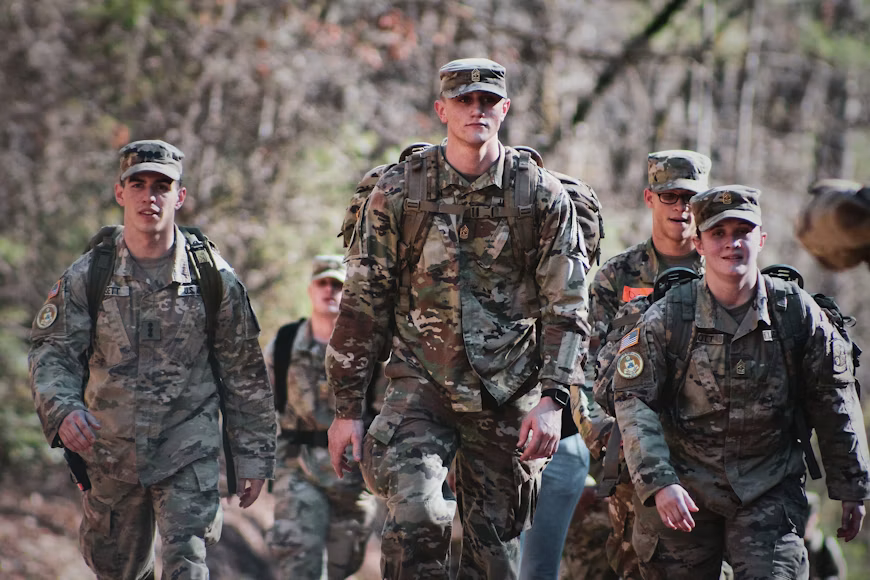
However, military officials said the drones created a danger for troops and Customs and Border Protection staff on the ground. Curtis Taylor, a major general with the U.S. Army’s Fourth Division, said cartel networks are using drones more often to facilitate smuggling and observe law enforcement efforts. Since being formed in 2025, the task force has flown thousands of observation missions.
Officials said cartels generally fly rudimentarily modified, commercially-available drones, not military-grade aircraft. Some are used to release drug packages in difficult-to-access areas near the border. Some work to obtain intelligence about patrol patterns to assist traffickers in avoiding detection.
The joint border task force has undertaken tens of thousands of patrols since its establishment in the last year. It has also undertaken thousands of dedicated observation flights along the southern border. The expanded mission comes amid increasing worry over how criminal networks have taken to drones, officials say.
Mexico Warns Against Unilateral Action
Mexican President Claudia Sheinbaum said any U.S. strike in Mexico without the consent or knowledge of authorities would represent a violation of her country’s sovereignty. To highlight, drones have been previously used in attacks in a cartels war elsewhere in Mexico as well, where they dropped explosives. Cartel drone use is studied by policy institutes instead of on an aggregate level.
U.S. officials haven’t said if any of this week’s strikes occurred in Mexico. In the past, Sheinbaum’s government insisted that any U.S. action near the border with Mexico be coordinated in advance. As U.S. presence grows, so has diplomatic tension over the issue of counter-drone systems.
Mexican authorities do their own patrols aimed at finding cartel drone deployments on their side of the border. Both officials acknowledged an informal mechanism for passing along information on suspected activity involving drones. Neither government has publicly set out the extent of that cooperation.
Past Incidents Raised Coordination Concerns
Earlier this year, a similar laser system forced the closure of airspace near El Paso International Airport for seven hours. In February, the military accidentally shot down a U.S. government drone of its design with the same system. Since then, lawmakers have urged the Pentagon and aviation regulators to improve coordination among agencies.
The February incident involved a laser that was used without coordinating with aviation regulators by border enforcement. To allow officials to investigate the disruption, the FAA shut down nearby airspace to protect commercial flights. Transportation Secretary Sean Duffy said he was to update legislators on what transpired.
The earlier incident had congressional aides concerned that separate agencies at the border would overlap on powers. Since then, officials have promised closer coordination between the Pentagon and the FAA and Customs and Border Protection. Officials said this week’s operation was carried out without the same air traffic disruption to civilians.