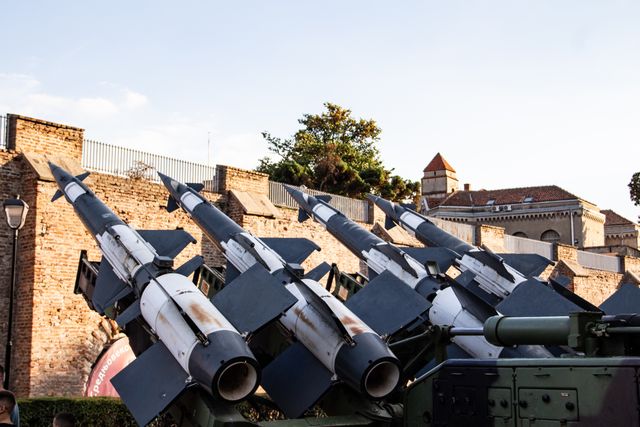
WASHINGTON, October 30, 2026 – The U.S. and Japan have made a great stride in moving their alliance from being a consumer of American arms to becoming a partner in the production of the same. It was on October 28 that Japanese defense minister Shinjiro Koizumi declared that the two nations had come to an agreement where they would set up an assembly plant for the AIM-120 Advanced Medium-Range Air-to-Air Missile, commonly known as AMRAAM.
What was agreed
The manufacturing and testing of AMRAAMs will take place at the plant in Japan to ensure shorter supply chains, additional sources of production, and regional stocks for both allies. Koizumi said that the deal was a “breakthrough agreement” which will provide equipment to Japan and the US and enhance Japan’s defense industry capabilities.
AMRAAM is crucial in modern air warfare operations. It arms fourth- and fifth-generation aircraft, including the F-35 Lightning II used by both nations, as well as ground-based air defense systems.
It doesn’t mean that one could expect missiles to be manufactured in Japan any time soon. No information about the Japanese industrial partner, location of the factory, expected number of missiles to be produced, or date of opening has been disclosed yet.
Why it matters
This comes amidst a shortage of global arms supply. The need for AMRAAM has increased due to the ongoing conflicts in both Ukraine and the Middle East regions, while continuing to use it as an air-defense against visual-range attacks by both the United States military force and the allies.
The U.S. Defense Department gave RTX’s subsidiary Raytheon a five-year production contract valued at up to $20.7 billion with an added provision of two more options in late September. This is geared towards an increase in production of Lots 41 to 47 in order to meet an objective of 1,900 units of AMRAAM production per year, with investment from RTX in test equipment as well as logistics.
Japan will help in making this process smoother. Should there be any logistical challenge or bottleneck to U.S. production facilities, the Japan factory would help to sustain the flow of arm supplies.
The SM-3 piece
The second agreement, though lesser-known, is that, according to Koizumi, Washington and Tokyo have agreed to “share technical information necessary to ramp up production of the Standard Missile-3 Block IIA, which is an interceptor launched from ships that can intercept ballistic missiles.”
It’s already true that the SM-3 Block IIA is an America-Japan cooperation project, but what is certain is that there is a determination to increase production capabilities for the missile. No details were mentioned about how large that increase would be, nor in the Pentagon description of the Hegseth-Koizumi meeting.
The China shadow
While neither official named Beijing directly, the context of the region could not be ignored. Koizumi stated that he and his U.S. counterpart, Defense Secretary Pete Hegseth, had “a sense of crisis” about the deteriorating security situation and would move forward with alliance deterrence “even faster and stronger.”
Hegseth told the Association of Southeast Asian Nations (ASEAN) defense ministers in Cebu that the American policy was “strong, quiet and clear,” strong enough to deter coercion but not too strong to needlessly escalate.
The regional context includes disputes in the South China Sea, the East China Sea, and Tokyo’s build-up of its own defense capabilities.
A long negotiation
But getting there wasn’t fast. The process started in July 2024 and has taken more than two years, partially because Japan places severe restrictions on its weapons exports and co-production. AMRAAM missile has its secret guidance system and intellectual property, which should be protected prior to hosting the final assembly in Tokyo.
It’s no wonder that this treaty is about much more than just missiles. This treaty reflects a political and industrial change: Japan is becoming more willing to produce such sensitive systems inside the country, and the US is more ready to facilitate the process by transferring industrial infrastructure.
What comes next
This is the tough part. Japan needs to select a partner, pick a location, obtain technology transfer approval, hire and train personnel, and create a quality control process that can keep up with U.S. military standards. It cannot be done quickly.
However, the path is becoming clear. As part of the joint “Operation Supercharge” program, the allies are working to increase the speed, diversity, and resilience of munitions production. In a region where deterrence requires not only sophisticated aircraft but also sufficient quantities of missiles to equip them, that could end up being every bit as important as any new fighter jet.