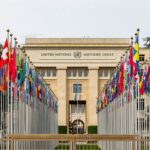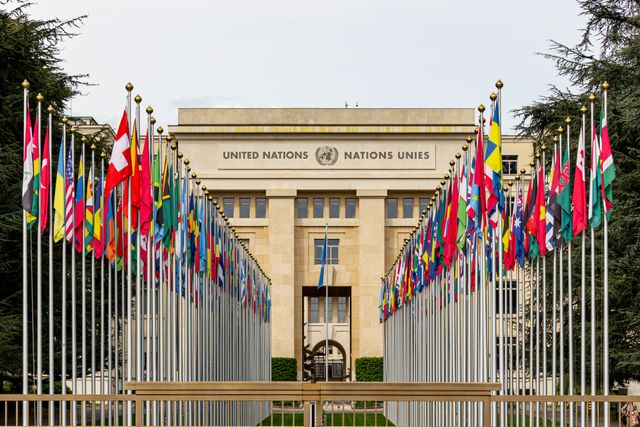
WASHINGTON, November 13, 2026 – As you step into the large green and gold General Assembly Hall at East 42nd Street this week, you can almost feel the diplomatic barometer falling when the issue of veto power in the Security Council comes up. It took thirty-five years of the United Nations Mission for the Referendum in Western Sahara, also called MINURSO, in their distinctive blue helmets, to monitor the ceasefire line in the desert. Then one raised hand did the trick.
Thirty-five years of peacekeeping. One Russian veto. A sudden vacuum across Western Sahara.
Why was the 193-member General Assembly summoned for its 39th plenary session of the 81st session to review the veto? Why did diplomats swiftly move on to elect 19 new members to an obscure budgetary oversight body? It is because of the mandatory “veto initiative” of the General Assembly, which requires the permanent member of the Security Council that vetoes a resolution to justify itself before the larger body.
According to the coverage provided by Sahara Press Service of the special debate of the General Assembly, the main discussion of the plenary session was connected with the Russian veto of the UN Security Council’s resolution on the extension of MINURSO’s mandate, which led to the termination of the peacekeeping operation after its more than thirty-year activity in the region. Representatives of African, European and Latin American states took the floor one after another to express their opinion about the dangerous consequences of the withdrawal of peacekeeping forces without a clear political settlement and, indeed, the problem of the deadlock of the referendum process was obvious to all.
In light of General Assembly Resolution 76/262—originally adopted in 2022 as an attempt to make permanent members justify their vetoes at a General Assembly debate—the discussion provided non-Council states with a unique opportunity to raise their voices. In particular, several delegations stated that vetoing a mandate that has been working for a long time threatens international peace and security and leaves local observers, humanitarian organizations, and ceasefire monitoring without any guidance. Meanwhile, the Russian delegation responded that maintaining an obsolete mechanism without making adjustments that would address the structural imbalance, according to Moscow, only perpetuates the existing situation.
This is what makes the negotiations of the United Nations so odd to someone observing the process outside of Turtle Bay: while diplomats exchanged tough remarks regarding the future of Western Sahara, the Assembly had to continue doing its job of keeping the machinery of the international organization running. Namely, the delegates voted in secret on who should become new members of the Committee for Programme and Coordination, which is the major subsidiary body of both the Economic and Social Council and the General Assembly.
One would not expect that an election for a spot on a technical committee would have any kind of political undertones, but within the United Nations system, a spot on the CPC, with its 34 members, is critical to who gets to judge how peacekeeping and human rights operations are funded and monitored. To win one of those 19 three-year positions, one must do a lot of lobbying and politicking months beforehand.
But no one exiting the chamber after the gavel had sounded mistook housekeeping for a solution. With the debate scheduled to continue, as delegates go through a long list of speakers, some fundamental issues remain unsettled: who is keeping track of ceasefire violations in Western Sahara, how UN representatives continue to keep the dialogue moving without the logistical support of MINURSO, and whether Security Council paralysis will drive the crisis diplomacy back to the floor of the General Assembly.
In the rain outside along the East River, delegates were whisked away into black sedans as the rain droplets danced around the national flags lining First Avenue. One single veto ended a 35-year-old mission in the blink of an eye; it will take much longer to restore trust, or any process at all, toward peace in Western Sahara.